Visit snapshot
- When
- Saturday, August 15, 2026 · around 6 p.m.
- Who
- Four adults: two men and two women
- Bought
- About 2 kg of Hanwoo across several cuts
- Payment
- Meat at the butcher; table fee, drinks and additions at the restaurant
- Table fee
- ₩8,000 per person on this visit
- Route
- Wangsimni Station → Seongdong 08 village bus → short walk
First, understand the two-step meal
This was not a single restaurant order. We first walked through the market, chose a butcher and paid for the raw Hanwoo there. We then took the packaged meat to a nearby restaurant that accepts market purchases, paid its separate table-setting charge and grilled the meat at our table.
That split matters when comparing prices. A butcher's displayed price is not necessarily the final meal cost. Add the restaurant's per-person charge, drinks, rice, stew or any other dishes before deciding what fits your budget. On our visit the table fee was ₩8,000 per adult, so four adults meant ₩32,000 before drinks or additions. Both venue rules and prices can change.
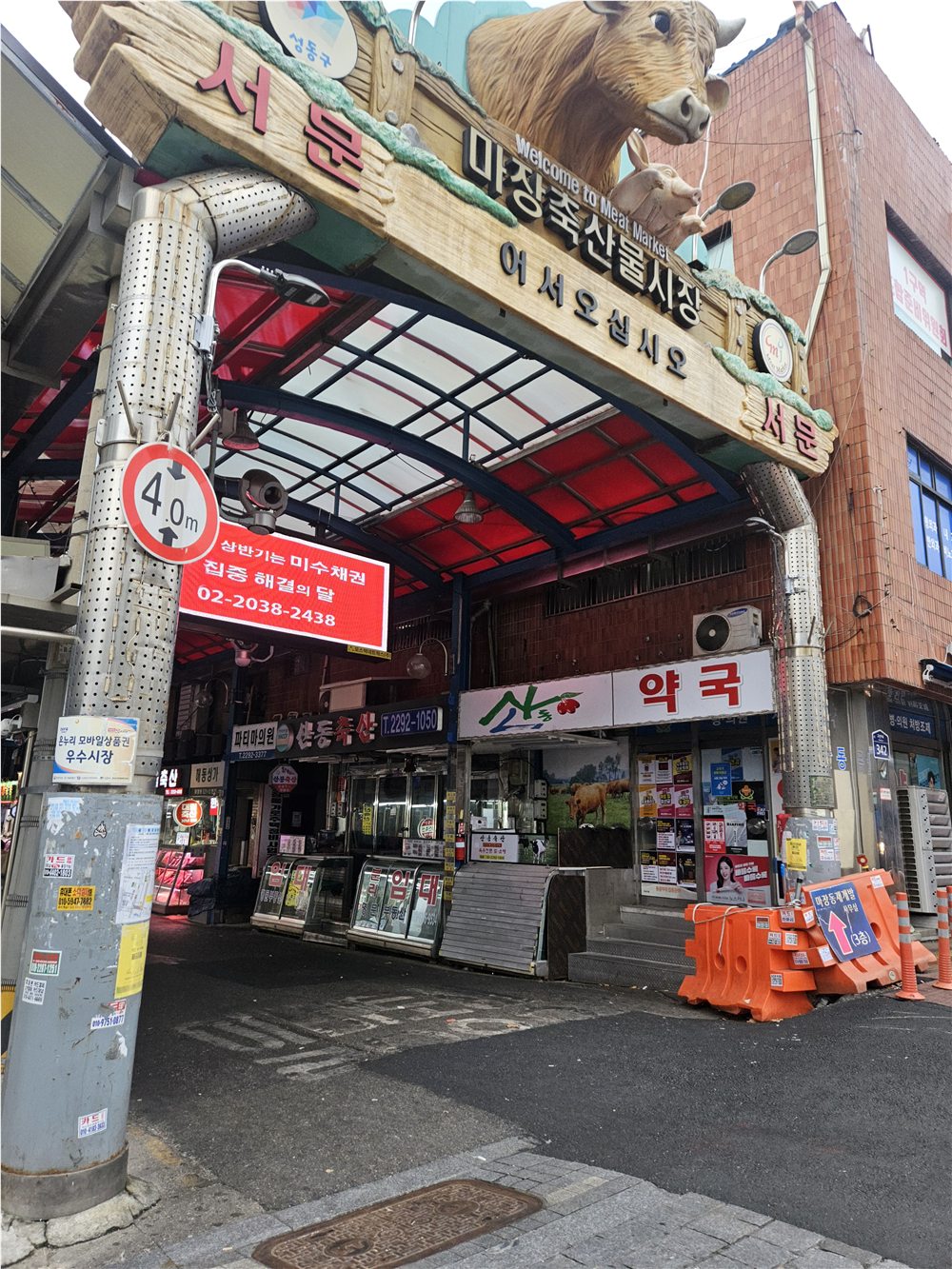
What the market felt like on Saturday evening
We arrived at about 6 p.m. Some wholesale-facing areas looked quiet or closed during this particular Saturday visit, while butchers serving individual customers were open. That observation is not a market-wide weekend-hours rule: individual shops keep their own schedules, so check the exact shop if one matters to you.
The number of counters and cuts made browsing part of the experience. Signage and labels were mainly in Korean, and I did not test an English transaction. A translation camera and a saved list of cut names would reduce friction: deungsim (등심, loin/ribeye area), ansim (안심, tenderloin), tosisal (토시살, hanger/tender skirt) and salchisal (살치살, chuck flap).
This remains a working meat market. In August, odors from meat handling were strong enough that a smell-sensitive visitor might find the walk uncomfortable. Raw cuts and animal by-products may also be visible. This is useful context, not a hygiene verdict on every shop.
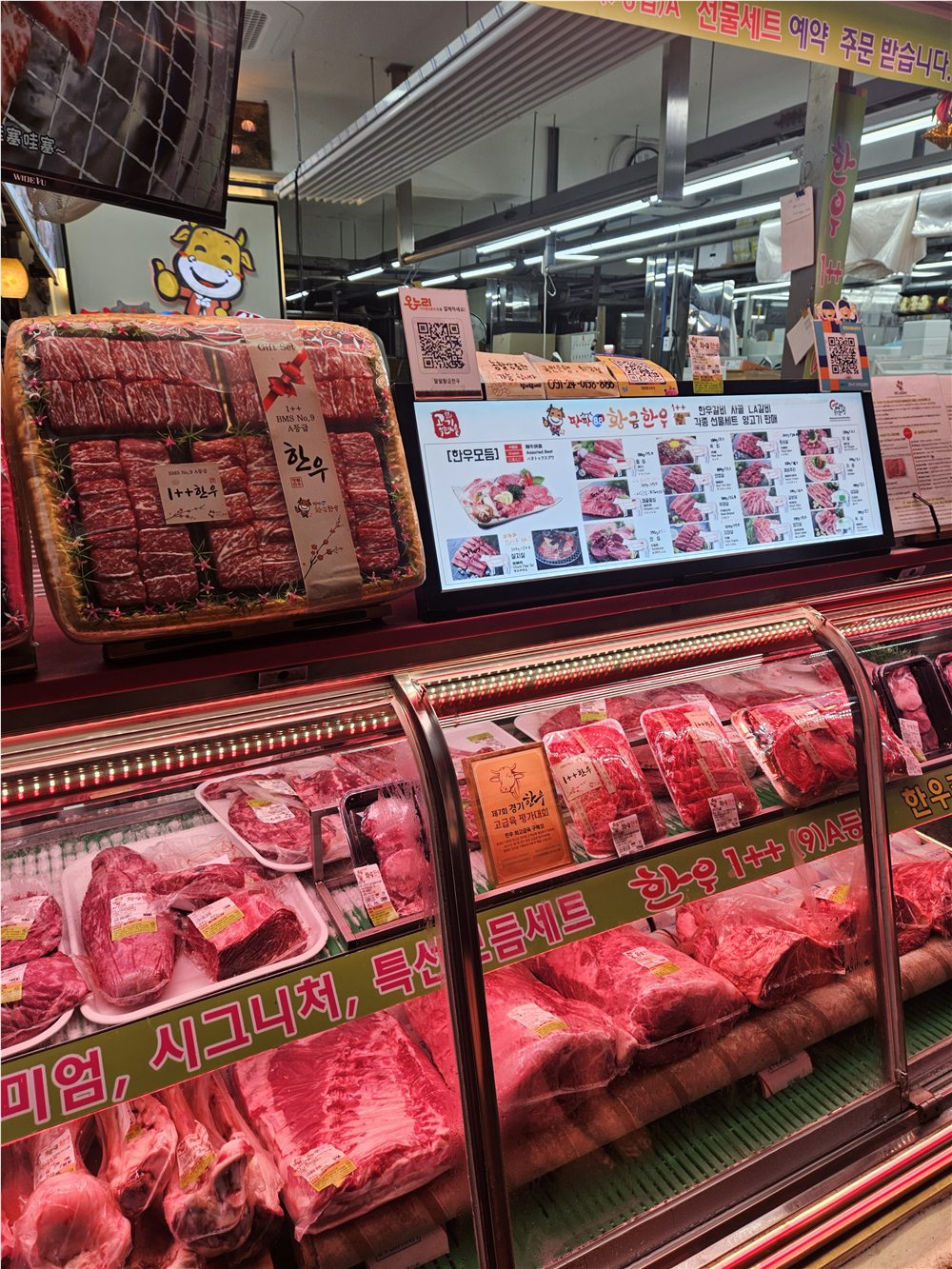
How we chose the Hanwoo
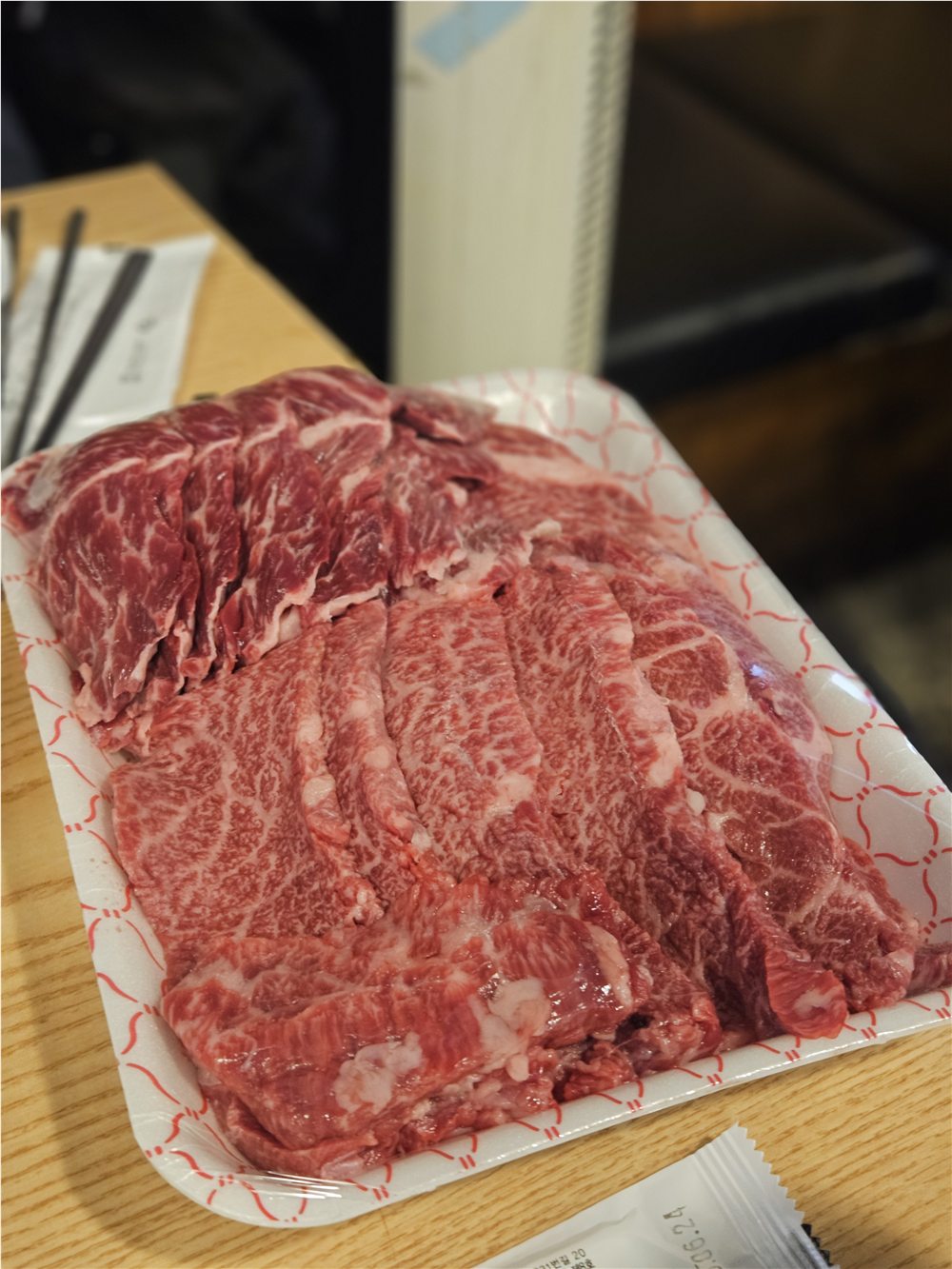
We picked one butcher and asked for a mix rather than buying one cut. The shop recommended loin, tenderloin, hanger and chuck-flap cuts, and we bought about 2 kg in total. Divided across four adults, that is roughly 500 g purchased per person—a meat-heavy order, included here as context rather than a serving recommendation.
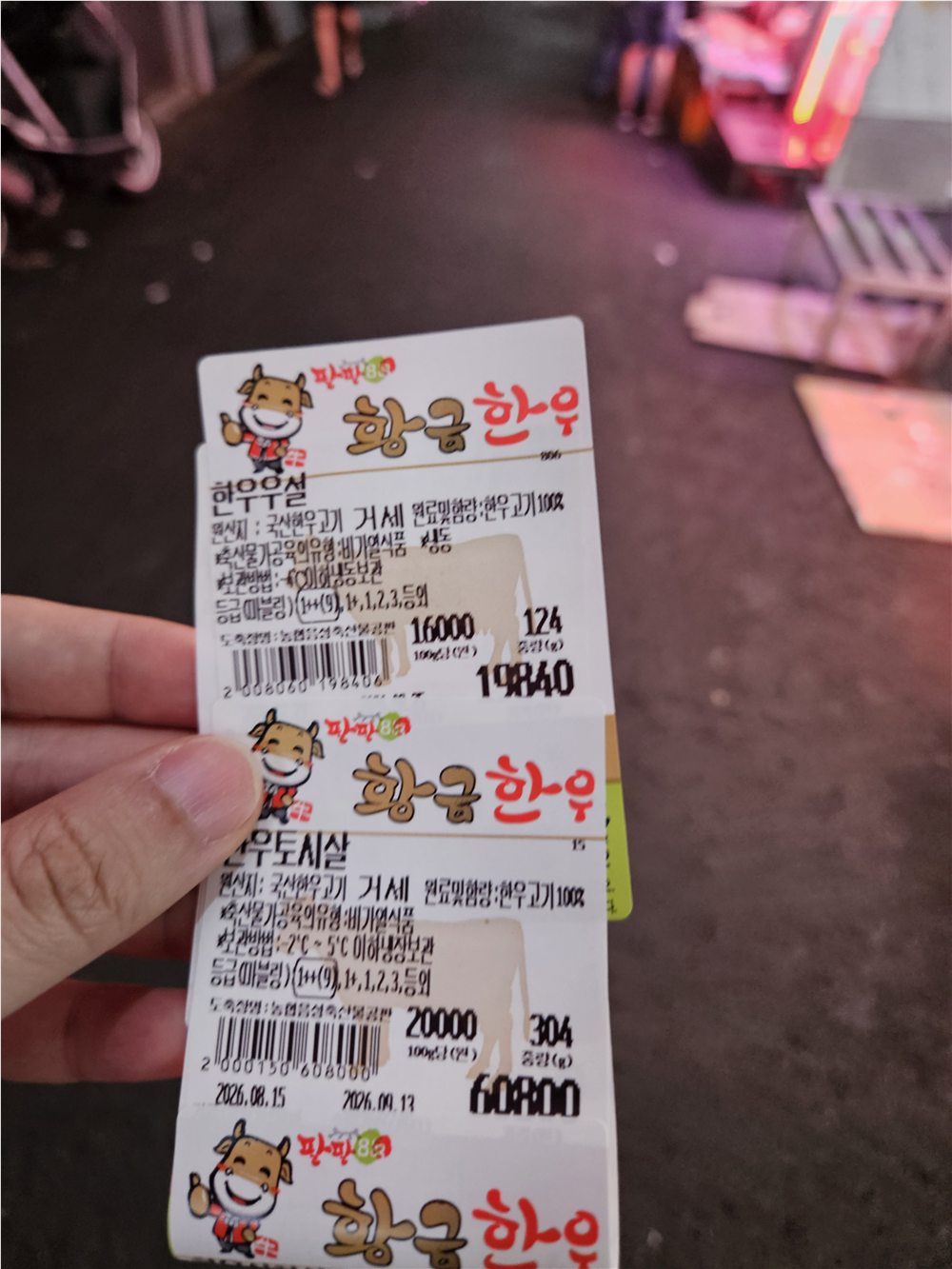
Some of our beef was labelled 1++, Korea's highest quality grade tier. A high grade mainly signals marbling and related quality factors; it does not mean every cut will taste the same or suit every diner. Ask for the cut, weight, price per 100 g and total before payment. The photographed labels show individual items, but I did not retain a complete enough meat receipt to publish a reliable full purchase total.
Taking the meat to the charcoal restaurant
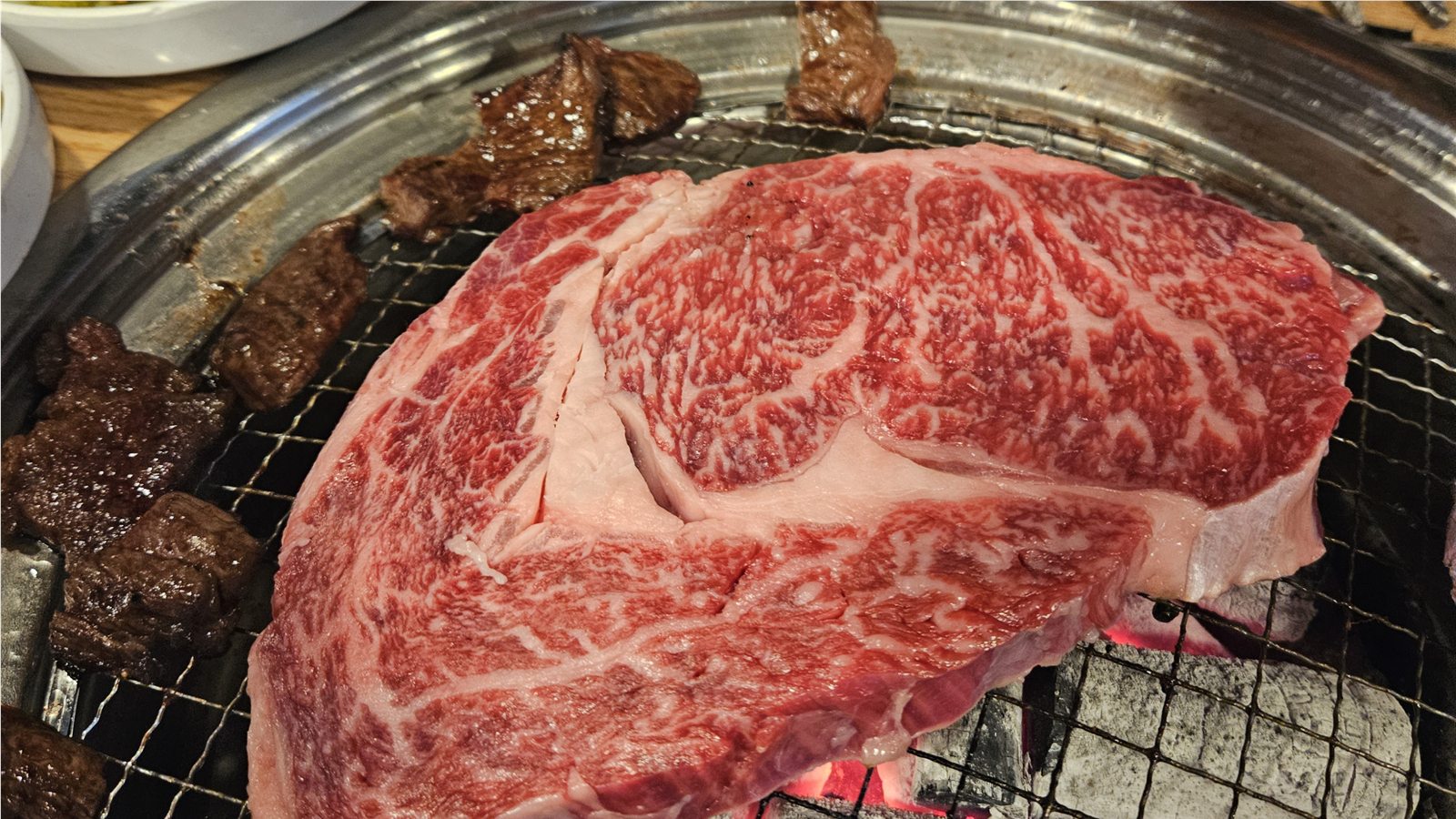
We carried the purchase to a nearby restaurant known locally as Sutbuljip (숯불집). The table charge covered good charcoal, the grill and side dishes during our visit. We ordered drinks separately. Rice and doenjang-jjigae made the meal feel more complete, but they should be treated as additional orders unless the restaurant confirms otherwise.
The charcoal was powerful. We placed manageable pieces on the grill, watched the surface closely and turned them as needed to control scorching. If you have never cooked Korean barbecue at the table, ask the server to demonstrate before loading the grill. Service level is not guaranteed, but asking is safer than guessing with expensive beef and strong heat.
My favorites were the 1++ loin and salchisal. I found both rich, deeply savory and very tender, with the salchisal delivering especially pronounced marbling. That is a personal taste note from this meal—not a claim that the same shop, grade or cut will taste identical on another day.
Summer heat, toilets and accessibility
The restaurant had air conditioning, but the charcoal still made our table hot in mid-August. I would personally choose spring, autumn or winter for a more comfortable combination of market walking and tabletop grilling.
Parts of the market occupy older buildings. The toilet I used felt narrow and cramped. I did not conduct a step-free-route or accessible-toilet audit, so travelers with mobility requirements should confirm facilities with the exact butcher and restaurant before visiting.
Our route from Wangsimni
We exited at Wangsimni Station, boarded the Seongdong 08 village bus and walked about three minutes from the market-area stop. We returned to Wangsimni by the same bus after dinner. Seoul's current public information also lists Seongdong 08 from Wangsimni toward the market area, but stop names, traffic and walking paths can change.
Run the route again in Naver Map or Kakao Map on the day, and save the market gate, butcher and restaurant as three separate pins. Searching only for “Majang Meat Market” can leave you at the wrong side of a large, visually dense area.
Who I would recommend it to
- Travelers who want to choose multiple Hanwoo cuts rather than order a fixed restaurant set.
- Groups comfortable cooking meat over strong charcoal at the table.
- Visitors interested in a functioning specialist market, including its noise, smells and Korean signage.
I would choose a conventional Korean barbecue restaurant instead if you need one bill, an English menu, staff-cooked meat, confirmed step-free access or a predictable all-in price. The market process is the point, but it also creates the friction.
What I would decide before another visit
I would choose the restaurant that will cook or accept the meat before completing the butcher purchase, then set a budget for both bills. I would also keep the package labels and complete receipts together: the photographs from this visit explain part of the purchase, but they cannot reconstruct a reliable full total.
This is an independent, self-funded record of one visit. Neither the butcher nor the restaurant paid for, previewed or approved this article. Handle raw meat carefully, keep it chilled and follow the restaurant's fire-safety instructions.
Plan your own visit
This visit was on . Use the guides below for the choices you still need to make.
- Decide whether Majang fits your meal
Compare a buy-then-grill meal with a prepared-food market stop.
- Agree on the complete order and bill
Separate quantity, minimum servings, table charges and extras before payment.
- Ask about weight and total price
Use the market phrases with the exact package label in front of you.
Article updated .
Links to check now
- The butcher used on this visit — Google Maps
- The charcoal restaurant used on this visit — Google Maps
- Seoul Future Heritage — Majang Meat Market history
- Seongdong-gu — Majang market-area regeneration information
- Seoul Cheonggyecheon Museum — current area transport directions
- Korea Institute for Animal Products Quality Evaluation — official beef grade categories