What matters
- A menu price can represent one serving even when the restaurant requires two or more servings of that item.
- Ordering and payment may happen at different places or in the opposite order from another restaurant.
- Water, utensils and basic side-dish refills are increasingly self-service, so check the signs before calling staff.
- A table bell is a normal way to request service where one is installed.
- Cards are widely accepted, but an overseas card can still fail at a particular kiosk or terminal.
- Tipping is not customary; pay the displayed bill unless a clearly disclosed service charge applies.
Check the queue, break time and last order first
A restaurant can be open as a place while the kitchen is between lunch and dinner service, and the last-order time can be earlier than closing. Check the latest official listing or the restaurant's own channel, then confirm the notice at the entrance because hours and closure days change.
Popular venues may use a paper list, entrance kiosk, Korean phone notification or reservation-and-waiting service. Read whether every guest must be present, whether a deposit is required and how long the table is held; joining a queue is not the same as having a confirmed reservation.
Find the ordering channel before sitting down
Look for one of four common flows: staff take the order at the table, you order and pay at the counter, a kiosk issues the order, or a tablet or QR menu sends it from the table. Do not repeat the same order through two channels when the first screen appears slow.
At a kiosk or tablet, choose a supported language before adding items and inspect the cart for quantities, required options and extras. If the screen requests a Korean-only login, phone number or payment method, ask for staffed ordering instead of entering invented information.
Decode servings before comparing prices
The number beside a barbecue cut, stew or set can be the price for one serving while the menu separately requires two or more servings. Confirm the unit, minimum quantity and whether the rule applies per table, per dish or per guest before assuming the displayed amount is the group's total.
Useful labels include 1인분 for one serving, 2인 이상 for two people or more, 세트 for a set, 추가 for an add-on and 공기밥 for an extra bowl of rice. A large shared dish may still exclude rice, noodles or a finishing fried-rice order, so ask what is included.
Place one short, verifiable order
Point to the exact menu line or photo and state the quantity. Separate required choices such as meat cut, size, spice level, noodle type and drink from optional extras, then ask staff to confirm the order when a translation is uncertain.
Handle allergies and medically necessary diets before sending the order, not as a casual modification afterward. A translated dish name does not reveal stock, sauce or shared equipment; use the separate dietary-requirements guide and leave if the kitchen cannot verify what matters.
Use the bell and self-service area correctly
Visit Korea notes that many restaurants use table call bells and that self-service water and side-dish areas are increasingly common. Press the bell once where provided, or say ‘yeogiyo’ to request attention; first check whether the item you need is already at a self-service station.
Spoons, chopsticks and napkins may be in a drawer under the tabletop rather than delivered by staff. Basic banchan and water are commonly provided and refilled without a separate charge, but premium side dishes, rice and menu add-ons are different products. Follow the restaurant's signs and ask before taking or requesting more.
Watch the shared-table cooking sequence
At Korean barbecue, hotpot and some stir-fry restaurants, staff may light the burner, cook part of the meal or tell you when it is ready. Do not adjust the flame, move a hot pan or start eating raw meat merely because the ingredients reached the table; watch the local flow and ask when unsure.
Shared dishes do not require every diner to order the same add-ons. Confirm whether noodles, rice or fried rice are ordered near the end and whether the kitchen or the table finishes them. Keep raw-meat tongs separate from eating utensils when separate tools are supplied.
Ask before assuming takeaway is available
Use 포장 (pojang) to ask whether a menu can be packed to go, but do not assume every dine-in dish, leftover or buffet item can leave the restaurant. Soups, raw foods, unlimited-refill items and foods cooked at the table can have packaging or food-safety restrictions.
Confirm the item count, sauce and disposable utensils before leaving. Carry the package upright and refrigerate perishable leftovers promptly; takeaway packaging does not reset the time the food has already spent at the table.
Confirm the bill and payment location
Even when staff take the order at the table, payment often happens at the front counter; other venues require prepayment or settle through the table device. Take the table number or receipt to the counter, check that quantities and add-ons match, and ask before splitting the bill because the terminal flow varies.
Credit cards are widely accepted in Korean restaurants, but a foreign-issued card or mobile wallet can fail at one unattended terminal. Try the physical card or staffed terminal and keep another card plus modest cash as backup. Tipping is not customary, so pay the displayed total rather than forcing a gratuity; review any clearly disclosed service charge before paying.
Dated firsthand evidence
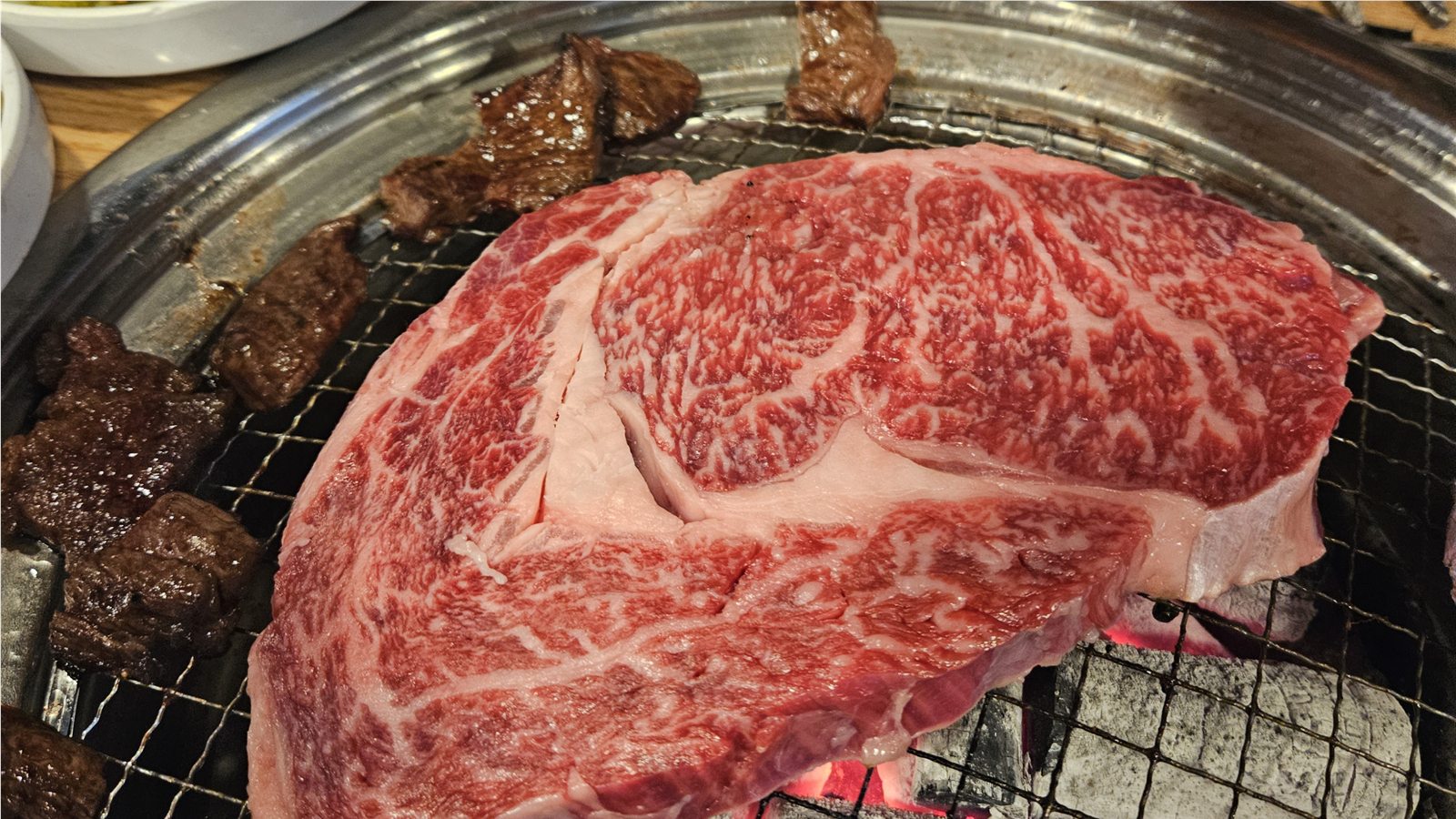
Majang Meat Market: buying Hanwoo and grilling it nearby
On August 15, 2026, four adults bought about 2 kg of Hanwoo and paid a separate ₩8,000-per-person table charge: ₩32,000 before restaurant extras. Compare the butcher bill plus the full restaurant bill, not the meat label alone.
The complete meat purchase total was not retained. This is one group’s order, not a standard serving recommendation or a current market-wide price.
Some links may earn us a commission at no extra cost to you. Recommendations stay editorially independent.
Official sources to re-check
Ask a local
A question about How to order food in Korea?
Use this form for a question connected to this guide. Your question is not public until it has been reviewed and answered. Sanghyeon writes replies manually in Korea, not in real time. The usual review window is 9:00 AM–9:00 PM Korea Standard Time (UTC+9), but the queue is not monitored continuously. We aim to respond within three business days; complex questions may take longer.
Not for urgent help: use the appropriate police, ambulance, embassy, medical or immigration service when waiting could cause harm or disrupt imminent travel.