What matters
- A familiar English dish name does not guarantee the same ingredients, garnish, broth or spice level at every restaurant.
- A Korean meal may combine rice, soup or stew, a main dish and several banchan, but the exact table structure varies by restaurant and menu.
- Shared grills, hotpots and large dishes can have minimum-serving or minimum-person rules.
- Red color is not a reliable spice scale, and a dish described as mild can still contain chili paste, chili flakes or spicy garnish.
- Broth, sauce, kimchi and seasoning can contain meat, seafood, soy, wheat, sesame or other ingredients that are not obvious from the dish name.
- Basic banchan are often included, but refill, self-service and extra-charge rules belong to the individual restaurant.
- Menus, operating hours, break times, last orders and payment channels can change; verify the venue on the day.
Choose a meal format before choosing a famous dish
An individual bowl or plate is the simplest first order: bibimbap, a rice bowl, gimbap, noodles or a soup-and-rice meal can usually be understood as one person's main meal. The recipe still varies, so point to the exact menu item rather than asking for only the broad English name.
A grill, hotpot, large stew or set table is a different format. It can be designed for sharing, require two or more servings, arrive in stages and leave rice or noodles as a separate add-on. Confirm the serving unit and minimum before comparing the displayed price.
- Individual: one bowl, plate or tray with a clear quantity.
- Shared: confirm portions, minimum order and what is included.
- Market or bunsik snack: order a small quantity first and check whether there is seating.
Use a low-risk first-meal sequence
Choose one main dish whose format you understand, one optional side or snack and a drink. This gives you room to learn the portion, heat and seasoning without ordering several unfamiliar shared plates at once.
Bibimbap is mixed rice with toppings and sauce; gimbap is a filled rice roll; gukbap combines soup and rice; grilled meat is normally a shared table process; tteokbokki is known for chewy rice cakes and commonly spicy-sweet sauce. These descriptions are orientation, not ingredient or allergy guarantees.
- Ask for sauce on the side when the restaurant can accommodate it.
- Taste a small amount before mixing all of a strong sauce into the dish.
- Do not label soup, noodles or vegetable dishes vegetarian until the stock and seasonings are confirmed.
Understand rice, soup and banchan on the table
Visit Korea describes the classic Korean table around rice, soup, kimchi and banchan, with the diner combining bites in their own order. Baekban is a set-meal format built around rice, soup or stew and several side dishes; the main item and number of dishes differ by restaurant.
Do not assume every dish on the table is unlimited or free. Water, utensils and basic side-dish refills may be self-service, while rice, premium banchan and menu add-ons can cost extra. Read the signs or ask staff before taking more.
- Use the spoon for rice and soup when practical; chopsticks handle many side dishes.
- Use serving utensils when supplied for shared food.
- Keep raw-meat tongs separate from eating utensils at barbecue tables.
Read flavor and heat without trusting color alone
Gochujang and gochugaru appear in many sauces, marinades, stews and garnishes, but restaurants use different quantities and recipes. A red dish may be moderate for one diner and very hot for another; a pale broth can still have a strong fermented, seafood or meat flavor.
Ask whether the kitchen can reduce the spice before ordering. Removing visible chili after cooking may not remove chili paste from the sauce, and adding rice or water does not make an allergen or medically unsafe ingredient safe.
- Say the exact food you cannot eat, not only ‘not spicy.’
- Keep a neutral side such as plain rice only if it fits your dietary needs.
- Stop eating and follow your medical plan if symptoms appear.
Match the order to the group and the restaurant
Look for labels such as 1인분 (one serving), 2인 이상 (two people or more), 세트 (set) and 추가 (add-on). A price beside meat can be one serving even when the restaurant requires two servings; a shared pan may be sold by size rather than by person.
Solo diners should favor individual bowls, soups, noodles, set trays, bunsik and restaurants that visibly accept one-person orders. A busy shared-menu restaurant may decline a one-person order or require the same minimum as a group, which is an operating rule rather than a judgment about the traveler.
- Point to the exact menu line and show the quantity.
- Confirm whether rice, noodles and drinks are separate.
- Review the cart before sending a kiosk or tablet order.
Treat dietary safety as a separate task
Packaged-food allergen labels can help with sealed products, but a restaurant dish still needs recipe and cross-contact questions. Stock, fish sauce, fermented paste, marinade, garnish, shared oil and shared utensils can matter even when the main ingredient looks suitable.
For a severe allergy or medically necessary diet, carry a concise Korean-and-English message, follow the clinician-approved emergency plan and leave when staff cannot verify the food. Vegetarian, vegan, pork-free and Muslim-friendly labels answer different questions and do not replace an allergy check.
- Open the dietary-requirements guide before choosing a venue.
- Ask about stock and sauce as well as visible ingredients.
- Call 119 for a medical emergency; a travel hotline is not an ambulance.
Build one realistic food day
Use breakfast for a simple bakery, convenience-store item or one soup or porridge you have checked; choose an individual meal for lunch; reserve a shared barbecue, stew or set menu for dinner only when the group understands the order. Add one market or café snack between meals rather than treating every saved food as a full stop.
Queues, break times and last-order rules can consume more of the day than the meal itself. Keep one unbooked fallback near the itinerary and do not cross Seoul solely to copy a viral food list when a suitable version fits the current neighborhood.
- Breakfast: confirm that the venue actually opens early.
- Lunch: use the lowest-friction individual order.
- Dinner: choose one shared experience, not several overlapping mains.
- Late night: verify the kitchen's last order, not only the building's closing time.
Use the next guide for the actual ordering channel
Once the meal format is chosen, use the ordering guide for queues, kiosks, table tablets, serving units, takeaway and payment. Use the delivery guide only when the accommodation allows delivery and you can provide a usable address and contact method; use the convenience-store guide for sealed-food labels, heating and branch-specific services.
This page does not claim first-hand experience at a named restaurant and does not recommend a venue. Restaurant recommendations will be added separately only after current operation, exact branch identity and the stated editorial evidence are checked.
- Ordering: how-to-order-food-korea.
- Dietary safety: dietary-needs-korea.
- Delivery: korean-food-delivery-foreigners.
- Convenience stores: korea-convenience-store-guide.
Dated firsthand evidence
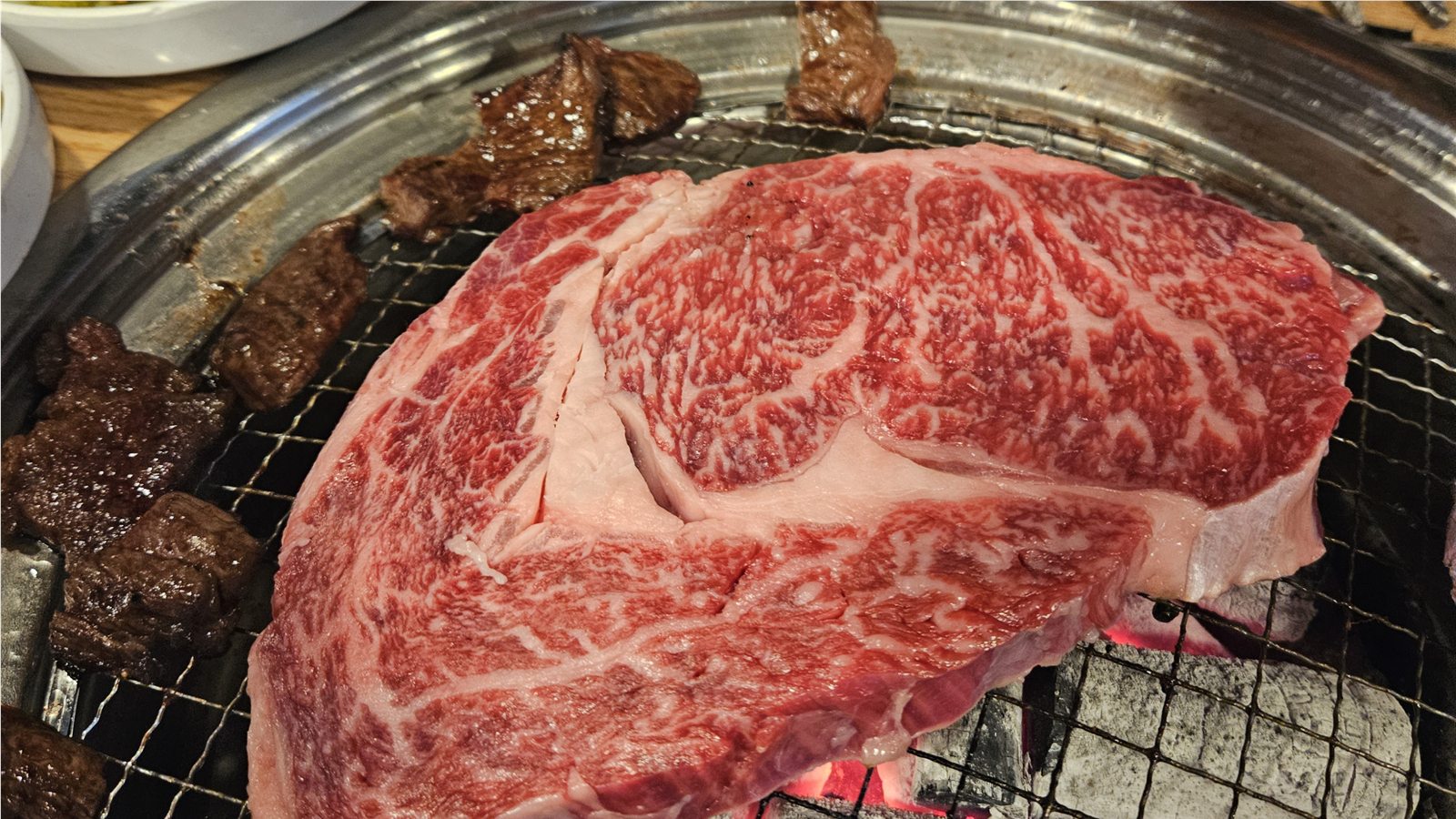
Majang Meat Market: buying Hanwoo and grilling it nearby
On August 15, 2026, four adults bought about 2 kg of Hanwoo and paid a separate ₩8,000-per-person table charge: ₩32,000 before restaurant extras. Compare the butcher bill plus the full restaurant bill, not the meat label alone.
The complete meat purchase total was not retained. This is one group’s order, not a standard serving recommendation or a current market-wide price.
Some links may earn us a commission at no extra cost to you. Recommendations stay editorially independent.
Official sources to re-check
Ask a local
A question about Korean food for first-time visitors?
Use this form for a question connected to this guide. Your question is not public until it has been reviewed and answered. Sanghyeon writes replies manually in Korea, not in real time. The usual review window is 9:00 AM–9:00 PM Korea Standard Time (UTC+9), but the queue is not monitored continuously. We aim to respond within three business days; complex questions may take longer.
Not for urgent help: use the appropriate police, ambulance, embassy, medical or immigration service when waiting could cause harm or disrupt imminent travel.